








April 17, 2026

Rack Attack Team
Electric bikes have completely changed how we ride, but they’ve also introduced a new challenge: transporting them safely. Unlike traditional bikes, most e-bikes weigh between 55 and 80 lbs. That’s nearly double the weight standard bike racks were designed to carry. Using the wrong rack isn’t just inconvenient, it can damage your bike, your vehicle, or worse, create a serious safety risk on the road. That’s why choosing a purpose-built electric bike rack is essential. In this guide, we break down the top 5 electric bike racks available at Rack Attack in 2026, along with everything you need to know before buying.
Comparison Table (What Actually Matters)
| Rack | Weight Capacity | Best Use Case | Key Advantage |
|---|---|---|---|
| Kuat Piston Pro X | 67 lbs | Daily use | Easiest loading + lights |
| Thule Epos | 75 lbs | All bike types | Maximum compatibility |
| Yakima StageTwo | 70 lbs | Travel | Stability at speed |
| Yakima OnRamp LX | 80 lbs | Heavy bikes | Built-in ramp |
| RockyMounts GigaWatt | 80 lbs | Security | Strong locking system |
The 5 Best Electric Bike Racks
1. Kuat Piston Pro X - Best for Premium Safety & Daily Use
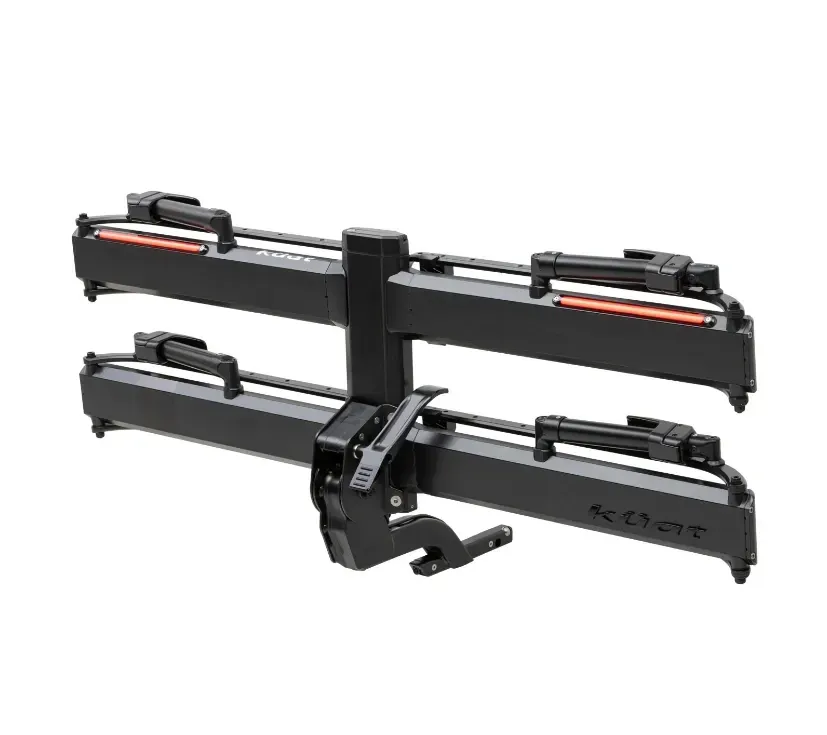
The Kuat Piston Pro X isn’t popular because it looks good, it’s popular because it removes friction from the entire loading process. Most racks fail e-bike users at the exact moment they matter most: when you're trying to hold a 70 lb bike upright while locking it in. The OneTap system eliminates that struggle completely. But the real differentiator is visibility. When you load two full-size e-bikes, there’s a high chance your rear lights are partially or fully blocked. The integrated LED lighting system solves a real safety problem, not a cosmetic one.
Where it wins:
- Daily drivers who load/unload often
- Riders concerned about night visibility
- Anyone who values ease of use over price
Where it falls short:
- Premium price point
- No ramp for ultra-heavy bikes
2. Thule Epos - Best for Awkward Frames & Zero Compatibility Issues
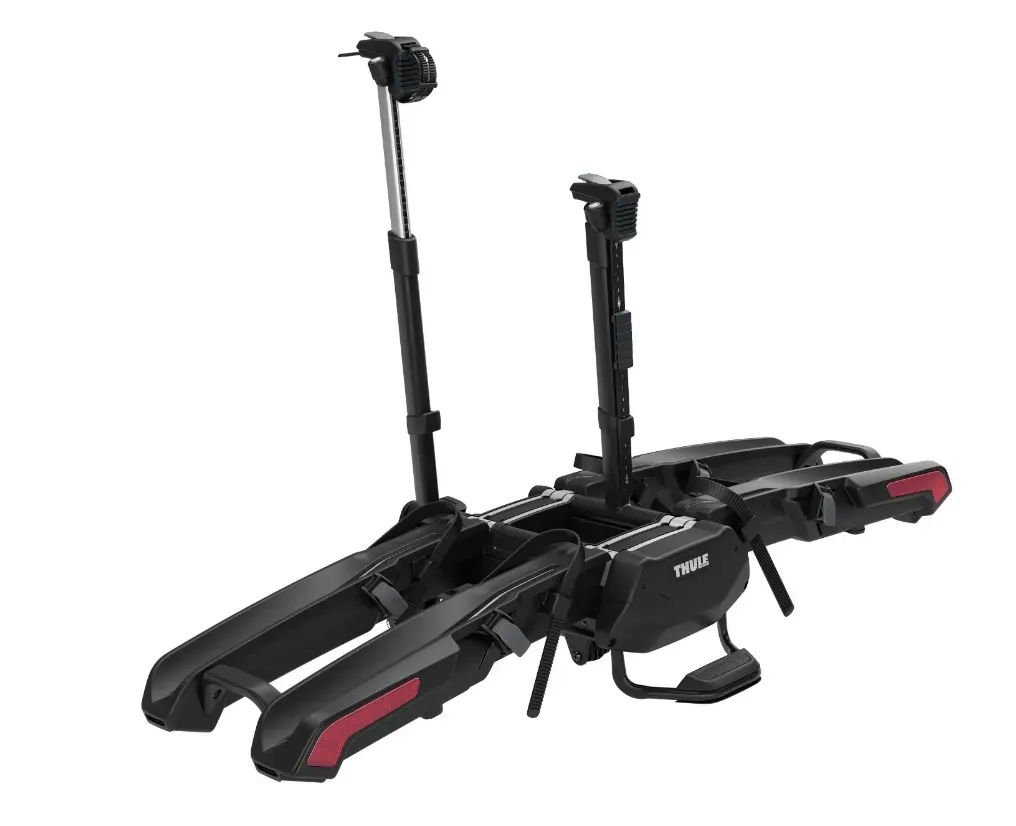
Most bike racks assume your bike has a traditional frame. E-bikes don’t follow that rule. Step-through frames, integrated batteries, rear racks, and full fenders make traditional hook-style racks frustrating or completely unusable. The Thule Epos avoids that problem entirely by removing the assumption. Its telescopic arm system lets you secure the bike from almost any angle. That flexibility isn’t a “nice-to-have” it’s what makes the difference between a rack that works sometimes and one that works every time.
Where it wins:
- Step-through e-bikes
- Commuter bikes with fenders
- Households with multiple bike styles
Trade-offs:
- Higher cost
- Slightly more setup time compared to simpler racks
3. Yakima StageTwo - Best for Stability at Speed
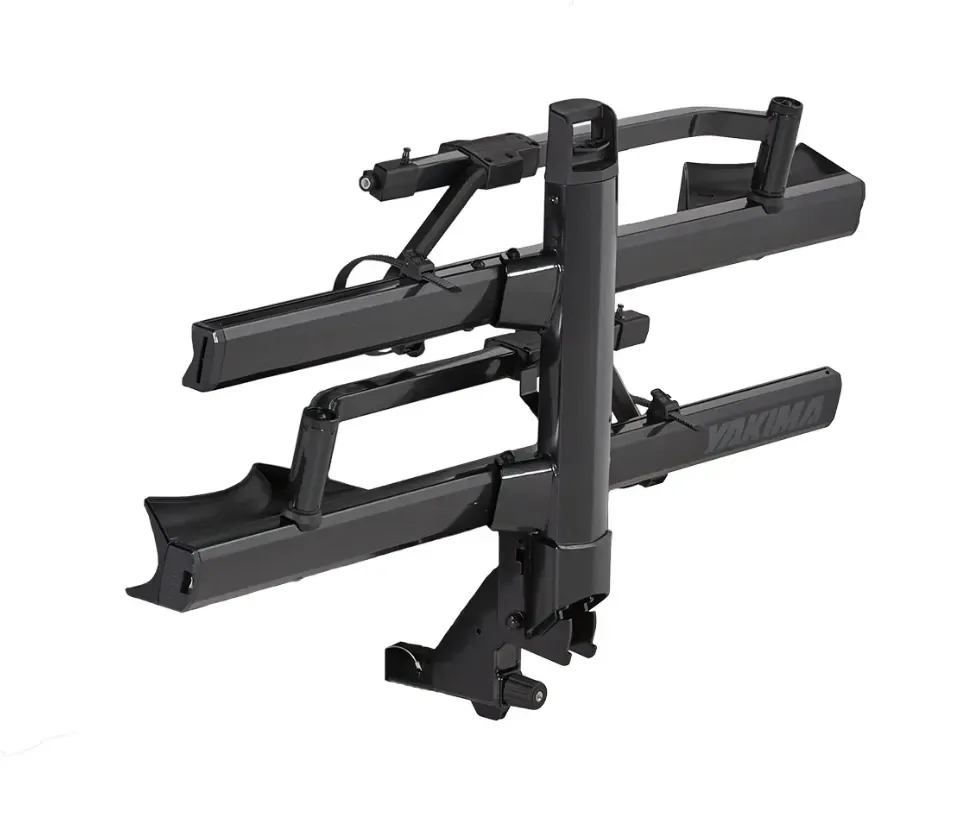
A lot of racks feel solid in your driveway. That changes quickly at 110 km/h. What separates the Yakima StageTwo is how it behaves under dynamic load; wind resistance, road vibration, and uneven terrain. The staggered tray design isn’t just about spacing it reduces handlebar interference, which is one of the main causes of instability during transport. This is the rack for people who actually travel with their bikes, not just short city drives.
Where it wins:
- Highway driving
- Gravel roads / light off-road use
- Larger SUVs and trucks
Limitations:
- No ramp included
- Slightly heavier system overall
4. Yakima OnRamp LX - Best for Heavy E-Bikes & Accessibility
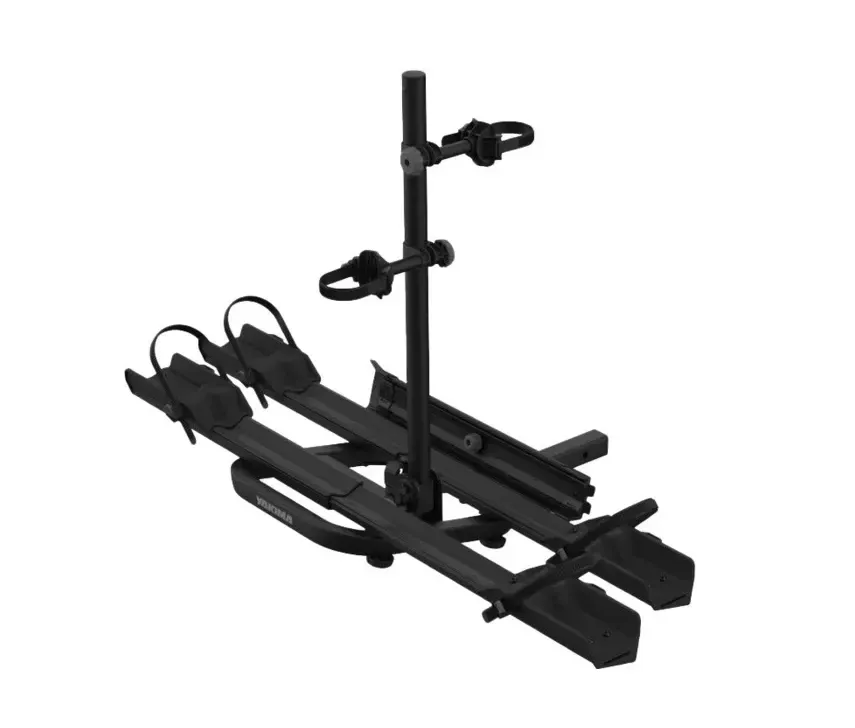
Here’s the reality: lifting a 75 lb bike repeatedly isn’t sustainable for most people. The OnRamp LX isn’t just convenient, it solves a physical limitation. The integrated ramp turns a lifting problem into a rolling one. This becomes even more important for: Older riders, Solo users, Heavier cargo-style e-bikes. It also has one of the highest weight capacities in this category, which gives you more margin for error.
Where it wins:
- Heavy e-bikes (70–80 lbs)
- Riders who load solo
- Anyone prioritizing ease over speed
Trade-offs:
- Slightly bulkier design
- Slower loading process compared to clamp-style racks
5. RockyMounts GigaWatt - Best for Security & Value
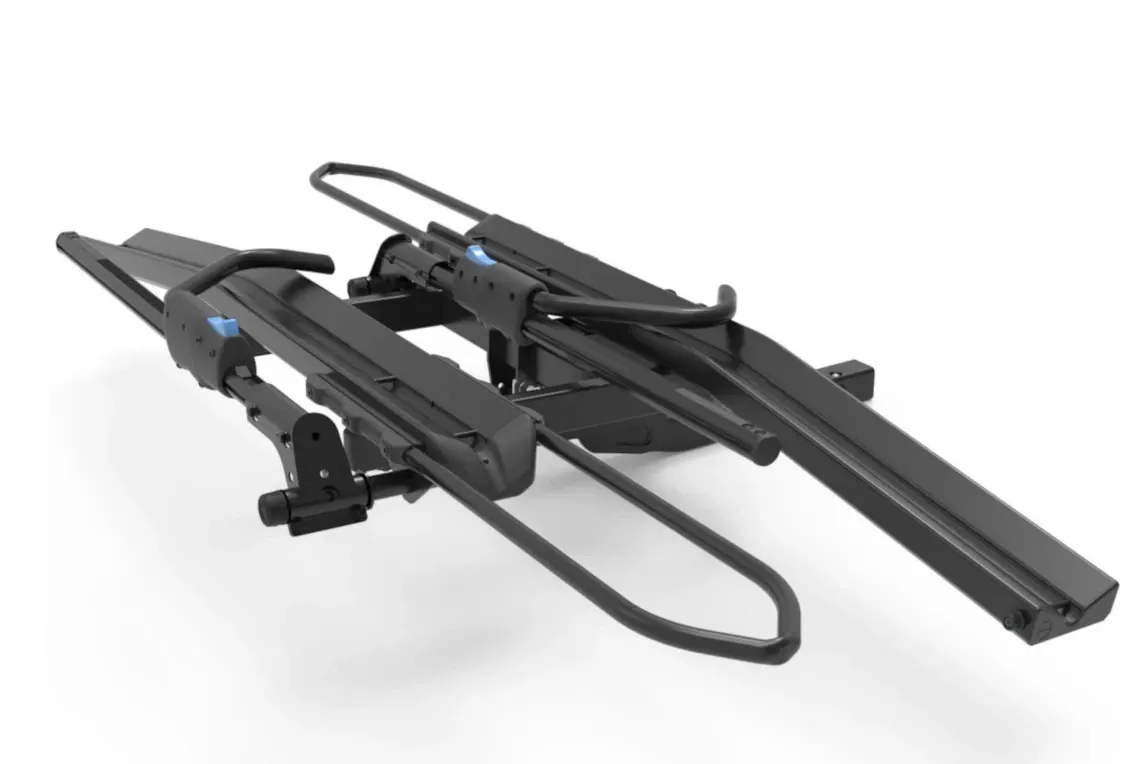
Most rack locks are deterrents not real protection. If you’ve ever handled a standard cable lock, you know how easy they are to cut. That matters when you’re carrying $5,000–$10,000 worth of bikes. The GigaWatt takes a different approach by including a proper chain system. It’s not theft-proof but it significantly raises the barrier. It’s also one of the more straightforward, no-nonsense racks in this lineup.
Where it wins:
- Security-conscious buyers
- Budget-to-performance value
- Fat tire e-bikes
Limitations:
- Less refined user experience
- Fewer “premium” features
Buyer’s Guide: Choosing the Right Electric Bike Rack
Buying an electric bike rack isn’t just about picking the strongest option, it’s about choosing something that actually works with your bike, your vehicle, and how you plan to use it.
E-bikes change the equation. They’re heavier, bulkier, and often come with features like fenders or step-through frames that don’t always play nicely with traditional racks. That’s why a little extra thought up front saves a lot of frustration later.
Start With the Real Weight (Not Just the Rating)
Most racks advertise a “per bike” weight capacity, but that number doesn’t tell the full story. Once you include the rack itself, your total load adds up quickly:
- Rack weight: typically 50–70 lbs
- Two e-bikes: often 120–150 lbs combined
That puts you well over 200 lbs on your hitch. A good rule: stay about 15–20% under your vehicle’s tongue weight limit to account for road movement and long-term stress.
Choose a Mounting Style That Fits Your Bike
Not all racks hold bikes the same way and this is where compatibility issues usually show up.
- Wheel-mounted racks: Hold the bike by the tires. Great for protecting frames. Best for standard bike designs.
- Frame-mounted racks: Secure the bike by the frame or seatpost. Better for step-through bikes and fenders. More adaptable to different shapes.
If your e-bike has fenders or a step-through frame, flexibility matters more than speed.
Be Honest About Loading
This is the part most people underestimate. Lifting a 70 lb bike once is manageable. Doing it repeatedly after a ride, in awkward positions, or alone is where it becomes a hassle.
You’ll generally choose between:
- Lift-on racks → quicker but more effort
- Ramp-equipped racks → easier, especially for heavier bikes
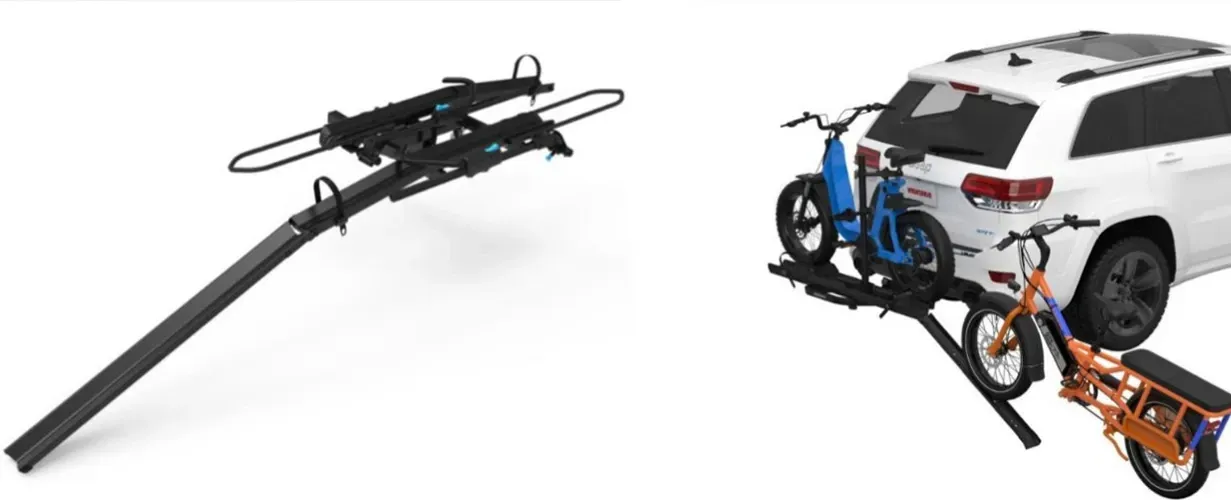
If your bike is on the heavier side, a ramp can make a bigger difference than any spec on paper.
Hitch Size = Stability
With e-bikes, stability isn’t optional. A 2-inch hitch receiver gives you:
- Better weight support
- Less movement while driving
- More confidence at highway speeds
Smaller hitches can work but they introduce more sway and stress over time.
Match the Rack to How You Actually Ride
Before making a decision, think about your real-world use:
- Long drives or road trips → prioritize stability
- Loading bikes alone → focus on ease of use
- Commuter or step-through bikes → look for compatibility
The best rack is the one you don’t have to fight with every time you use it.
Pro Maintenance: Keeping Your Electric Bike Rack Reliable
E-bike racks carry more weight than standard setups, which means small issues can show up faster if you ignore them. The goal isn’t constant maintenance it’s just staying ahead of wear.
1) Keep It Tight and Stable: Over time, weight and road vibration can loosen your rack slightly. Give it a quick shake every few trips and check the hitch connection. If anything feels off, tighten it before it turns into a bigger issue. A rack that’s solid at home will stay stable on the road.
2) Clean After Rough Conditions: Rain, dirt, and road salt can build up in moving parts and cause wear over time. A simple rinse after bad weather especially in winter, helps prevent corrosion and keeps everything working smoothly.
3) Light Maintenance Goes a Long Way: You don’t need much here. Occasionally apply a dry lubricant to moving parts and check areas where the bike makes contact. Keeping things clean and moving freely reduces long-term wear.
4) Store It When You Can: Leaving your rack on year-round exposes it to unnecessary wear. If you’re not using it for a while, storing it indoors or at least keeping it covered will help extend its lifespan.
Visibility & Legal: What Changes Once Your Bikes Are Loaded
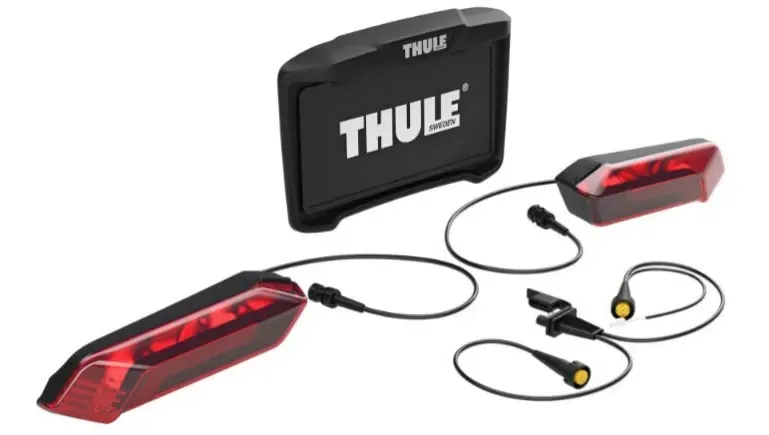
Once your e-bikes are on the rack, your vehicle isn’t the same anymore. They add bulk, reduce visibility, and can even put you at risk of fines if certain things are blocked. This is one of the most overlooked parts of owning an electric bike rack but it makes a real difference on the road.
1) Don’t Block Your Taillights: Large e-bikes can easily cover your brake lights and turn signals, especially on smaller vehicles. That reduces how visible you are to drivers behind you particularly at night or in bad weather. If your lights are partially blocked, it’s worth considering a rack with integrated lighting or adding an auxiliary light kit.
2) Keep Your License Plate Visible: It’s common for rear-mounted racks to block your license plate. In many areas, that can lead to fines or unwanted attention from traffic enforcement. If your plate isn’t clearly visible, a simple relocation bracket is an easy fix that keeps you compliant.
3) Be Aware of Width and Overhang: E-bikes especially fat tire models can extend wider than you expect. This can make tight parking, narrow streets, or drive-thrus more challenging.
Take a moment to check your setup:
- Make sure bikes don’t extend excessively past your mirrors
- Be mindful of clearance in tight spaces
4) Visibility Matters More at Highway Speeds: At higher speeds, small visibility issues become bigger risks. Wind, vibration, and reduced reaction time all amplify the problem. That’s where a stable rack and proper visibility really matters.
Essential Accessories: The Small Add-Ons That Make a Big Difference
A good electric bike rack will safely carry your bikes but the right accessories make the entire experience smoother, safer, and far less stressful. Most of these upgrades don’t feel essential at first, but they quickly become part of your everyday setup.
1) Hitch Locks for Security: Most racks come with a basic locking pin, but that’s mainly a deterrent, not real protection. A proper hitch lock helps secure the entire rack to your vehicle, reducing the risk of theft when you’re parked or traveling. It’s a small upgrade, but it adds a lot of peace of mind, especially with high-value e-bikes.
2) Frame Adapters for Tricky Bikes: If you’re riding a step-through or low-step e-bike, a frame adapter bar can make a big difference. It creates a stable top-tube style connection so the bike sits level and secure on the rack. Without it, some bikes can tilt or sit awkwardly during transport.
3) Loading Ramps for Heavy Bikes: If your rack doesn’t already include one, a ramp is worth serious consideration. Once your bike crosses the 65–70 lb range, lifting it repeatedly becomes the hardest part of using any rack. A ramp removes that struggle completely and makes loading a simple roll-on motion instead of a lift.
4) Backup Straps for Extra Stability: Even high-end racks can benefit from a little redundancy on long trips. A simple strap adds another layer of security, helping reduce movement over rough roads or extended highway driving. It’s not always necessary, but it’s a smart addition for road trips.
5) Weather Protection for Electronics: E-bikes are built to handle rain, but highway travel is a different story. At speed, water and debris hit much harder than normal riding conditions. A basic cover for the motor or display helps protect sensitive components during long-distance travel or heavy rain.
Final Verdict: Choosing the Right Electric Bike Rack
At the end of the day, there isn’t a single “best” electric bike rack for everyone. The right choice depends on how you ride, what kind of e-bike you own, and how often you plan to use it. What matters most is how well the rack fits into your real-world routine, not just how it looks on paper.
If we simplify it:
- Best overall premium experience → Kuat Piston Pro X
- Best compatibility → Thule Epos
- Best highway stability → Yakima StageTwo
- Best for heavy lifting → Yakima OnRamp LX
- Best security → RockyMounts GigaWatt
The key takeaway is simple: don’t just buy based on specs buy based on how you’ll actually use it. And if you’re unsure, the smartest move is always to test fit in person. Getting the right setup dialed in with your vehicle and bike removes all guesswork and ensures your e-bike is protected properly from day one.



